
Tempus adest Technicum
Springtime For Peter Thiel, and the stormy fronts of religious revivalism

One of my dearest childhood friend’s had a father, who, when I was a schoolgirl, was forever shocking me. He smoked cigars and swore, watched bawdy British television comedies and made fun of pretty much everything. He also introduced me to the references that worked their way into the title of this post.
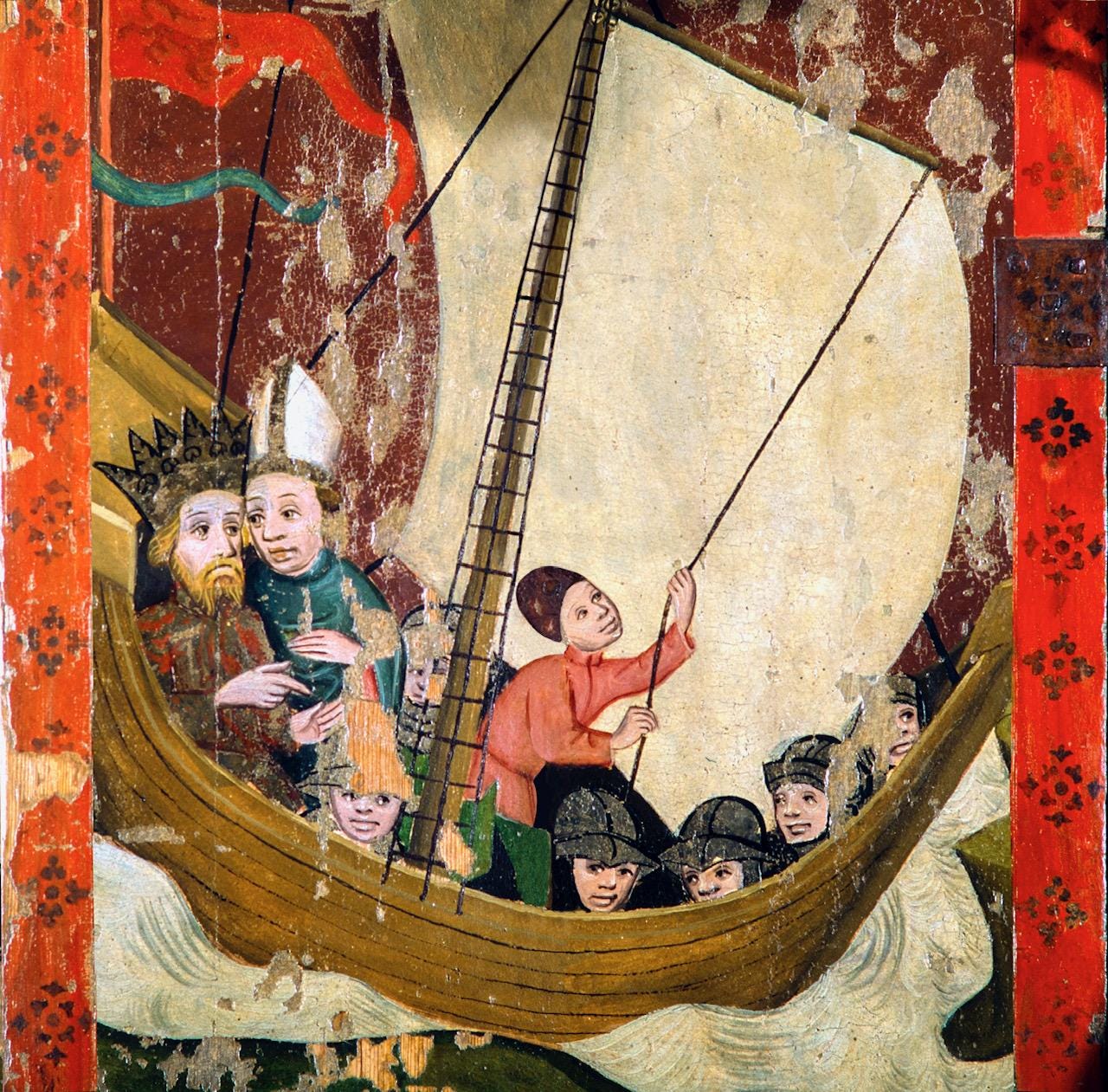
The first reference is to a song from one of the oldest collection of written music from the late medieval/early renaissance called Piae Cantiones. My friend’s s dad was a huge fan of Renaissance music. He even organized a group of us teenagers to come to his house weekly to learn polyphony, early American shape note music, and Renaissance ballads “Tempus Adest Floridum / The Time is Here for Flowers) is a song from Piae Cantiones. It is a delightful one, all about the season of spring, whose tune was later hijacked in the Victorian era to different lyrics you would doubtless recognize. While originally associated with spring it has ended up being associated with winter. Hold onto that thought for now, but first, the song is worth a listen, particularly in this season of spring light and daffodils.
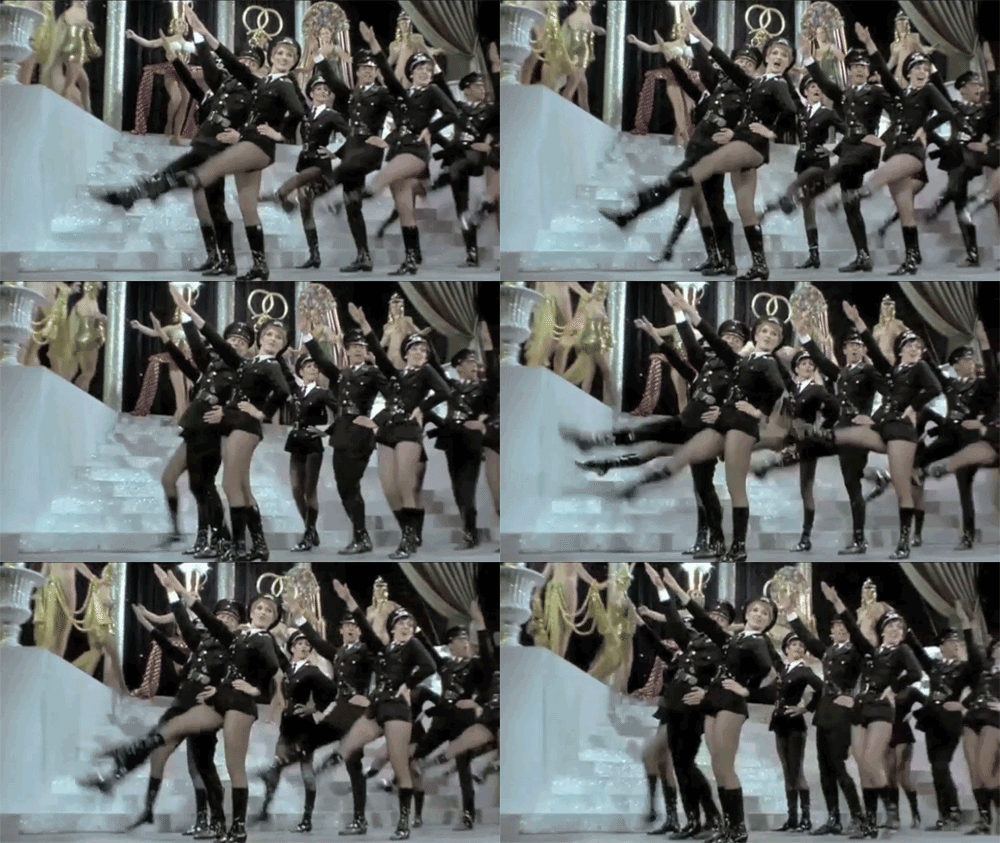
Of course the second reference is also to a song. This one is from Mel Brook’s black comedy, The Producers in which two down at heel producers attempt a get-rich-quick scheme by fooling patrons into bankrolling a play that is guaranteed to flop. They find a musical written by an aging Nazi that perfectly accommodates their scheme. The opening song and dance sequence is titled Springtime for Hitler . The unexpected twist of course is that their plan backfires and following what appears to be the expected disastrous opening, the play instead becomes a wild success. In the film, as in the real world, it turns out people are pretty entertained by the propagandistic self- delusions of fascism. The Producers was one way my friend’s dad shocked me, but also taught me a valuable truth: If you can laugh at evil, it hasn’t really won.
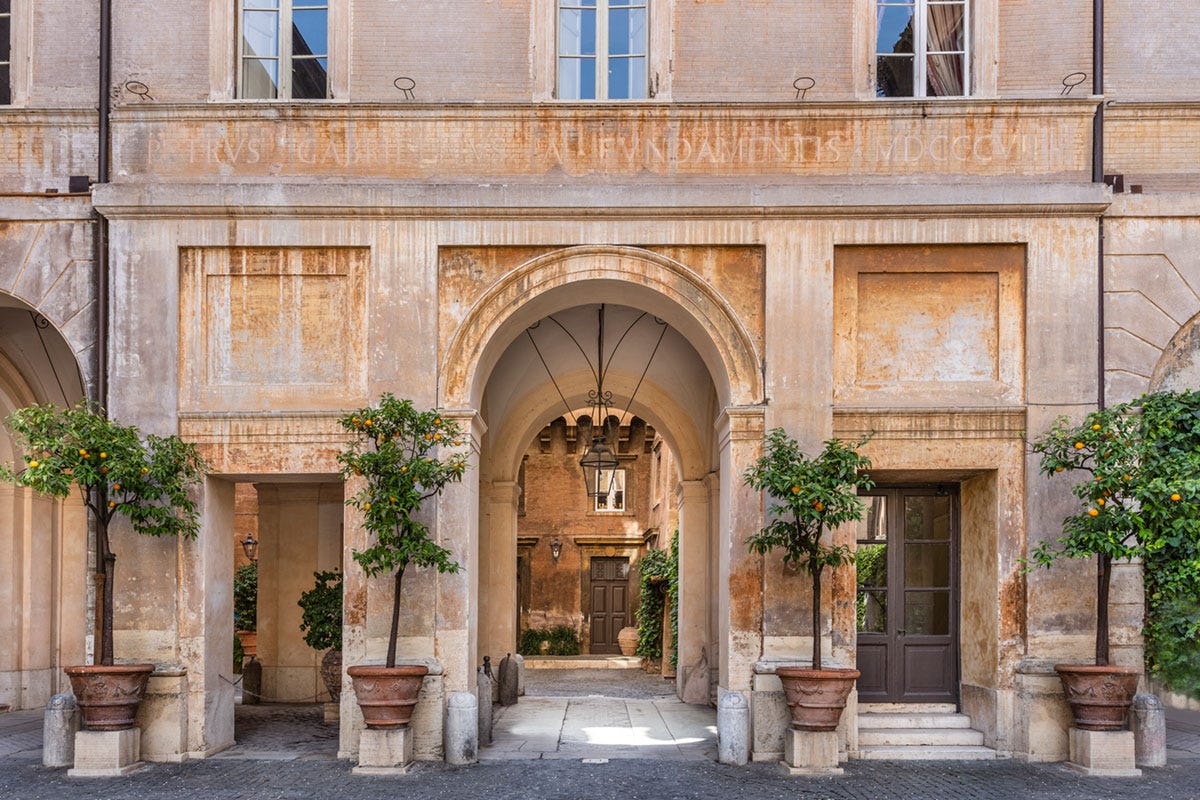
Our thoughts are perhaps better left with flowers and films in this most turbulent of springs. Lent is marching to its dramatic conclusion, and as it does, a storm has gathered over Rome. Peter Theil, the internet -illusive tech billionaire, founder of Paypal and Palantir, descended last week on the Eternal City. In Rome’s opulent Palazzo Orsini Taverna, Theil gave more of his signature private talks on the Antichrist.
He spoke to a select group of invitation only attendees, hosted by a group who identify as Neo-Guelfs. Neo-Guelfs were a nineteenth century political movement who had as their aim the reinstatement of the pope as ruler of the Italian peninsula. Ironically (and as a Catholic I can say thankfully) Pope Leo XIV seems to have been nowhere on the invite list, or if he was, did not deign to attend. Theil’s attempts last week were to solidify political sentiment in Rome, in favor of his anti-democratic techno-utopian future. His interest in the Antichrist is self-delusional to the point that nearly every one else but Theil seems to see that the man most likely to be the Antichrist in the age of information warfare, is probably the loudest voice warning against Antichrist.
If you scratch the surface in the realm of arts or religion, Peter Theil seems to surface a few layers down. He is directly involved with at least one Trump era member of the ex -officio board of trustees of the National Gallery of Art in Washington DC . He propelled J.D. Vance, who wears his Catholicism like a boy scout badge, from total obscurity to the vice-president of the United States, and he is a major financial backer of the Hallow App, (which incidentally makes their data available to marketing partners.) Is one Palantir? Do they need to check up on all the Catholics and make sure they are watching Marky Mark and Chris Pratt teach them how to pray?…..we wouldn’t want to learn that sort of thing from the pope, well…… at least not one Thiel and his Neo-Guelfs haven’t had a hand in bringing to power.
Theil appears to the one of the storm forces behind the scenes of what is now being called religious revival. To be honest, I am a bit pessimist about this revival. While there is indisputably a renewed interest in religion in general in the Gen Z ranks, the same people online saying a religious revival is happening called out transgenderism a few years ago as “social contagion”. They may have not been wrong about that but it begs the question that any “religious revival” may be more of the same phenomena. Models degenerate quickly into idolatry in our age. While I struggle to put my finger on exactly why this seems to happen, I suspect it has to do with our experience of time manifesting in an accelerated rate of change. In any event the general soul hollowing of our epoch on the heels of over a century of war and uprootedness, appears to make settling into (and out of) outward labels something we do, for better or worse, with apparent ease. I remain cautious of revival, most of all because it’s possible the outer trappings of religion or tradition are being employed by many for the wrong reasons.
The old advice from the Scriptures, “By their fruits you will know them…” follows Matthew’s warning about false prophets. It also involves a judgment embedded in the time scale of watching a tree to see if it bears fruit.
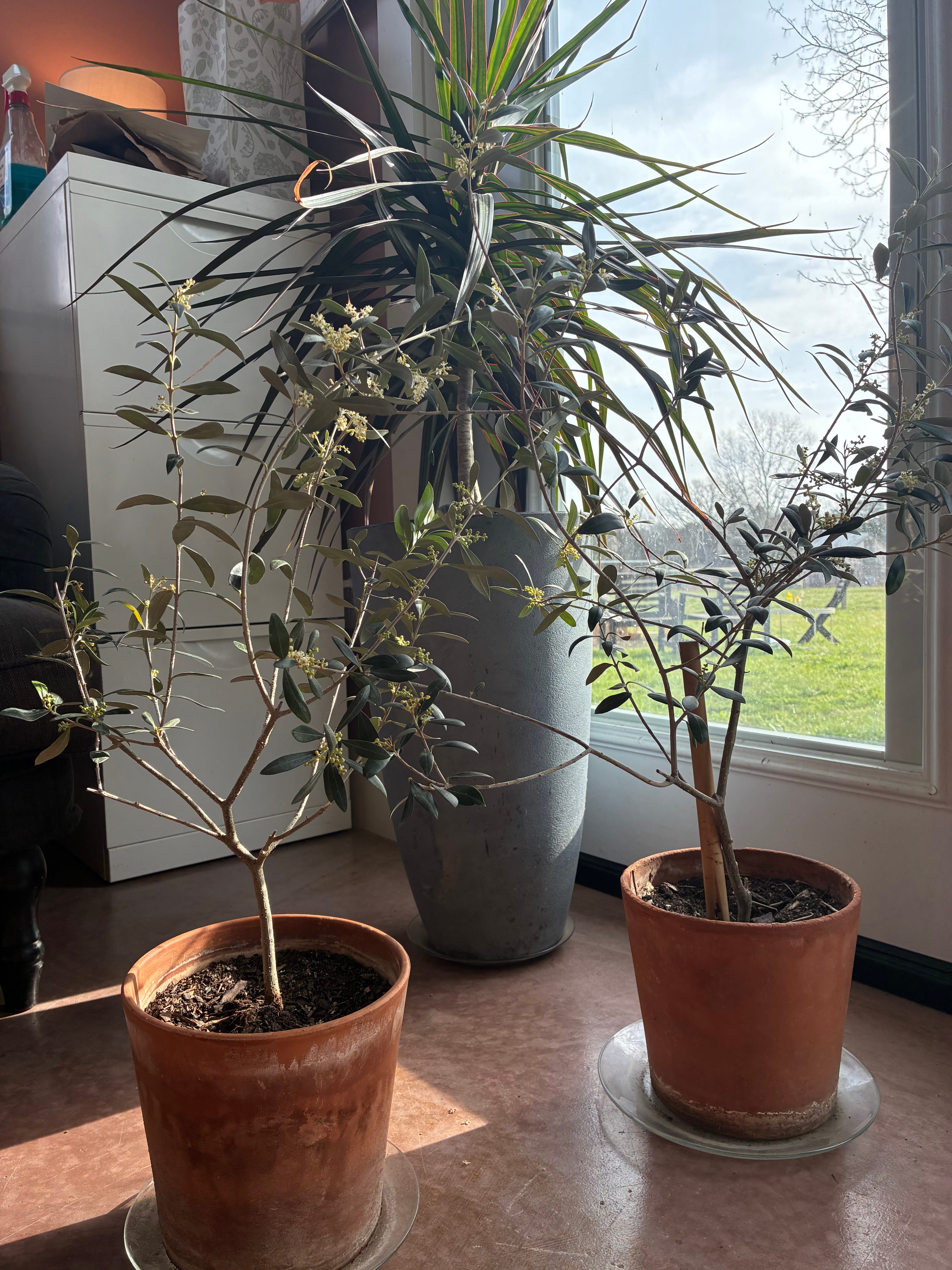
I have two little olive trees I have kept in pots for several years that only this spring have flowered. I am cautiously hopeful that they will bear fruit this year. But I can’t know for certain. There is a scale of waiting involved in both trees and the things of the soul that is inherently at odds with the rate of information being fed to us. Waiting patiently and withholding judgment are important modes of virtue oppositional to online discourse because of the algorithmic demands of immediate reaction and judgment. This means that anyone advocating against slowing down technological progress is in fact asking for an overturning of virtues needed for societal flourishing. Perhaps it is no accident that Theil feels threatened by Rome. In an interview in 2023, Paolo Benanti, a Franciscan friar appointed as the Vatican advisor on AI, gave an important ethical insight into the nature of all technology, one anti-ethical to Theil’s progress-at-all-costs mantra,
….every technological artifact is a displacement of power, is a form of order. Ethics of technology is simply questioning technology to allow people to be aware of this kind of transformation, to allow public decision makers to be aware of which kind of changing will be driving inside the society with that technology. That's what I'm looking for and that is what I try to teach.
If I learned an important lesson on laughing at evil from The Producers, I also learned a valuable lesson from Tempus Adest Floridum : The appearance of tradition is not the same thing as tradition. The lyrics we now associate with Tempust Adest Floridum is the Christmas carol Good King Wenceslaus which to be honest I have always loved. But the point is while the carol now boasts a medieval tune —it has anachronistic Victorian lyrics. You would be hard pressed to find more than a few people who sing traditional Christmas carols that wouldn’t swear the whole thing has been handed down totally intact from the medieval period. While it is very much in the spirit of the medieval mind to put new lyrics to old tunes, its a function of our time to mistakenly construe as tradition that which has always been more fluid. We would be wise to remember the technique of switching out a message, and repackaging something in an attractive or traditional vessel for delivery can be used both for the evolutions of musical delight but also to a totalizing effect. Revolution will always have a vested interest in keeping the trappings of beauty on her side but as a window dressing. Orwell brilliantly gives an example of this in the song that is used at the by the pigs in Animal Farm to stir up a revolution throughout Manor Farm. The song, Beasts of England, is sung to the catchy tune "Darling Clementine” but of course with revolutionary lyrics.
I recently read that the Nazi party in 1928 comprised 2.6 percent of the vote in Germany. How it mushroomed in ten years to take total control of the government and determine the course of history for the following decades is a grim reminder of the rapidity with which technology, communication and uprooted peoples can mobilize into authoritarian power in unstable times. The increased speed of decision making and visual manipulation enabled by AI keep men like Theil always two, or two thousand steps ahead. Some of those may turn out to be goose-steps. Peter Theil appears to be the greatest force behind the push for a post-liberal order, in which authoritarian regimes cloaked in outer religiosity use technology to control policy and citizens so that barriers to unmitigated “progress” move forward without pause. The anti-christ will not be AI, or as Theil fears a globalized world order. I don’t think it will be a thing at all. It will be men such as himself, bent on using the best things for the worst reasons.
And lest we end on a downer, my weeping cherry is in all her glory this week. I have already spent more than one kaffeepause just taking in the sakura. Hope springs eternal.

I feel like almost every time I read one of your posts I learn about something that I previously had no clue about. Thanks for writing and sharing it!
Do you have literally a single legitimate source that backs your claim that the Hallow App, "incidentally makes their data available to their financial backers"? The CEO clearly addressed this already on Twitter in great detail. This baseless claim (and your multiple spelling errors) throw your entire article under the shadow of lazy writing.